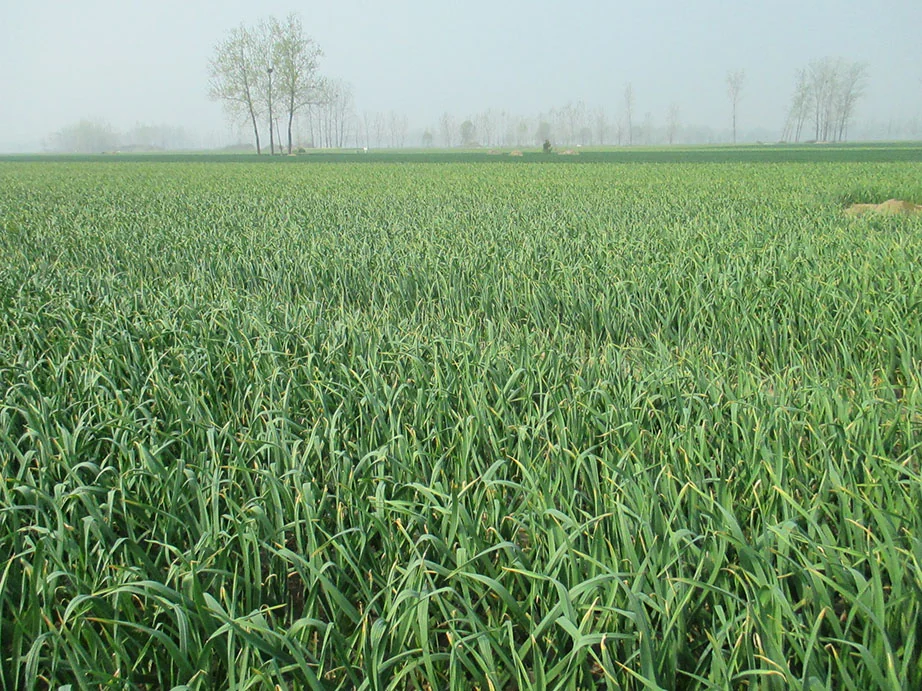
China’s garlic fields keep expanding. Late-May estimates put the country’s 2026 planting area at roughly 855,000 hectares, up 8.0% year on year — another step up for a crop that already dominates world supply. October 2025 rains pushed planting back to mid-November, yet the harvest outperformed expectations, adding volume to an already well-supplied market.
The acreage figure extends a multi-year pattern: Chinese growers responding to garlic’s reliable returns by planting more, even as the global market absorbs each successive crop with difficulty. For buyers, the signal is unambiguous — availability will not be the constraint this season.
Rising volume, falling price — again
Customs data for 2025 crystallizes the market’s central tension: export volume grew 1.4% year on year while the average export price fell 13.6%. The “rising volume, falling price” dynamic that has defined recent seasons is not correcting — it is continuing.
The arithmetic behind it is structural. China accounts for more than 70% of global garlic production and over 80% of global exports, so domestic planting decisions effectively set the world price. With another large crop entering the pipeline, downward pressure on quotations looks set to persist through the new season.
Size profile favors Europe and the Middle East
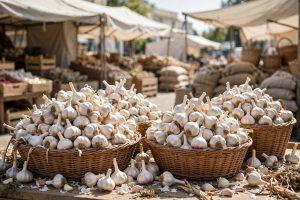
One bright spot for sellers is quality. The new crop is reported to run predominantly in the 5.0–6.0 size range, a profile well suited to European and Middle Eastern market preferences, according to Li Ming of Onedayone Group. Good sizing gives exporters a specification story to tell even in a soft-price environment.
For procurement managers, the combination of ample supply, favorable sizing, and weak pricing creates a buyer’s window — particularly for forward coverage into the second half of the year, when the full weight of the new crop reaches export channels.
The delayed planting adds context to the quality outcome. October 2025 rains forced growers to wait until mid-November to get the crop in the ground — a late start that might have been expected to hurt development. That the harvest instead beat expectations speaks to favorable conditions through the growing season, and it helps explain why the market is absorbing both bigger acreage and better sizing at the same time.
The takeaway: with 855,000 hectares planted and prices still sliding, garlic buyers hold the leverage. Lock in specifications on the well-sized 5.0–6.0 grades for EU and Middle East programs, and use the volume overhang to negotiate multi-shipment terms.