Ginger has delivered one of the most volatile produce stories of 2023. Wholesale prices at Beijing’s Xinfadi market climbed from 11.44 to 17 RMB per kilogram in the first half of the year — a jump of nearly 50% — while China’s ginger export volume from January to July fell 45.28% year-on-year, according to China Customs data reported by FreshPlaza. For a commodity that moves in huge volumes to the EU, the Middle East, and Southeast Asia, the whiplash has forced buyers and processors to rethink their 2023–24 playbook.
What drove the squeeze
The rally followed a familiar pattern for a tight-carryover year: limited old-crop stocks met steady demand, and speculative stockholding amplified the move. As wholesale prices marched upward through the spring, exporters found themselves priced out of key tenders — overseas buyers simply balked at offers built on 17 RMB raw material. The 45% collapse in export volume is the direct result: containers that would normally sail to Rotterdam, Jebel Ali, and Haiphong never got booked.
How buyers responded
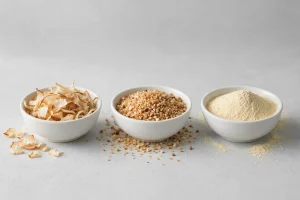
Importers adapted in three ways. Some shifted origins, testing Brazilian and Thai ginger where available. Others deferred purchases, drawing down inventories and betting on relief from the new crop. A third group — particularly in the processing sector — accelerated trials of frozen and dehydrated ginger formats, which can be contracted on longer terms and buffer fresh-market swings. Dehydrated ginger powder and frozen ginger dice, already growing categories, picked up fresh inquiries through the summer as buyers looked for price stability rather than spot-market exposure.
What comes next
The critical variable is the new crop. If harvest volumes normalize, prices should retreat from their peaks and export flows rebuild through the winter shipping season. But buyers burned by this year’s spike are unlikely to return to hand-to-mouth purchasing. Expect longer contracting horizons, wider origin diversification, and continued interest in processed ginger formats that decouple the finished product from fresh-price chaos.
There is also a structural lesson in the data. A 45% export collapse does not just reflect high prices — it reflects demand destruction, as some buyers reformulate away from ginger or switch to synthetic alternatives in certain applications. Winning that volume back will require competitive offers against the new crop, not merely a return to old price levels. Suppliers who maintained relationships and kept buyers informed through the spike will have a head start when the market turns.
The takeaway for buyers: ginger’s 2023 spike is a textbook case for forward planning. Locking in supply against the new crop, qualifying alternate origins, and building processed-format options into the category plan are the moves that separate a price shock from a supply crisis.