Two suppliers can both offer “IQF broccoli” and still deliver florets that behave very differently in a stir-fry, a catering tray, or a ready-meal line. The difference is rarely the vegetable itself. It is the specification: how the florets are cut, how they hold colour after cooking, and how they are handled from freezer to delivery. Agree those points before the order, not after the first container arrives.
1. Start with floret size — and stem length
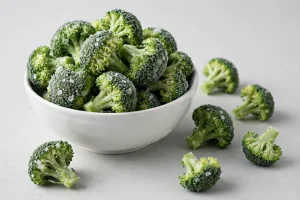
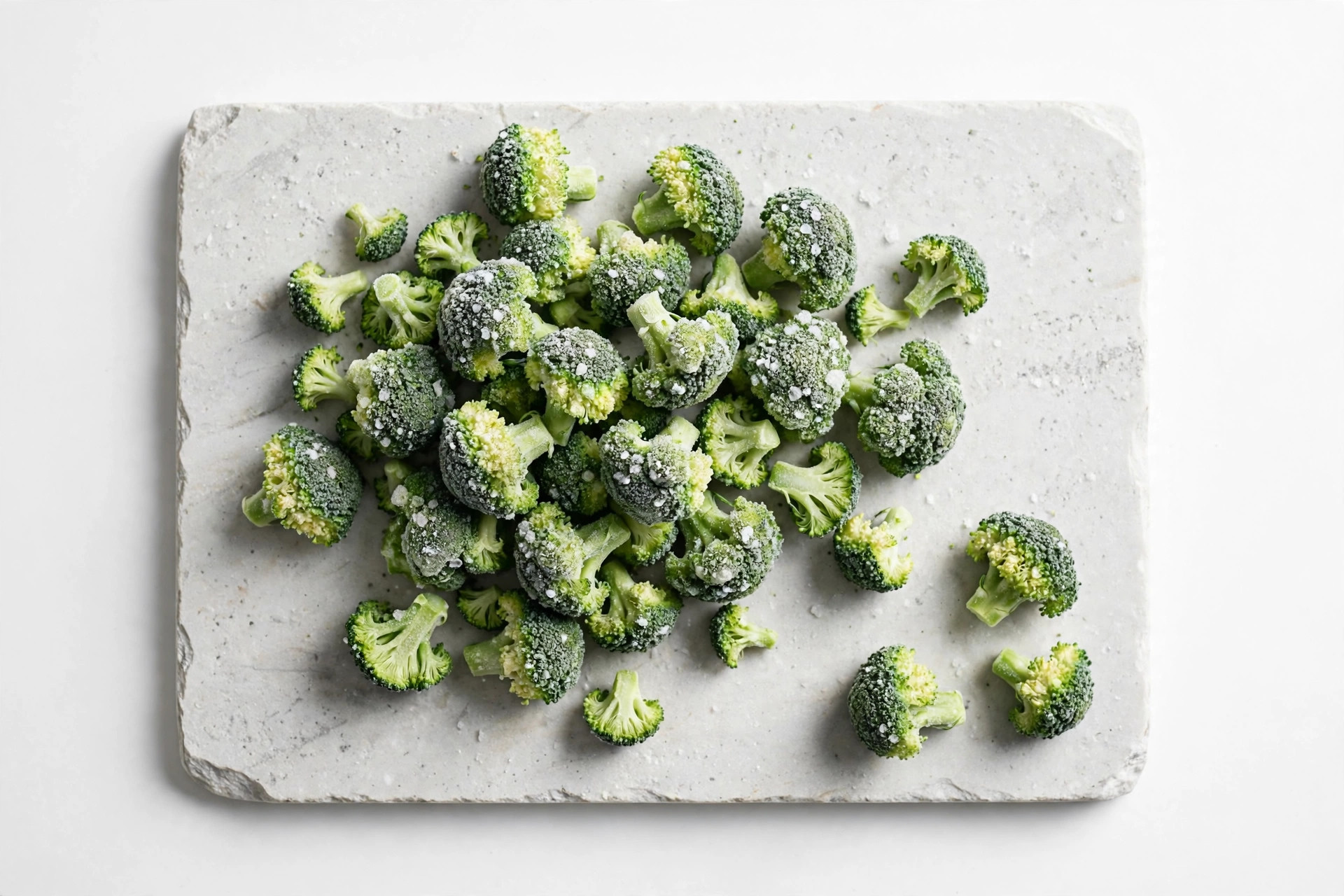
Floret size decides portioning, cooking time, and appearance on the plate. A small floret cooks faster and suits mixed vegetable blends; a larger floret holds its shape better as a side dish. Smiler Food lists IQF broccoli florets graded by diameter — 2–4 cm, 3–5 cm, or 4–6 cm — so buyers can match the cut to the application instead of accepting a mixed range. Agree stem length too, and ask what share of broken pieces or loose stem the specification allows. Compare that tolerance against the sample, not just against a photograph.
2. Judge colour and firmness after cooking, not just when frozen
Frozen broccoli can look bright green in the bag and still turn dull or soft after cooking. Assess colour and firmness by the method the finished dish will use — a short wok fry, steaming, or reheating in a catering tray. Cook the sample that way, then check whether the green stays even, the floret keeps its shape, and the texture stays firm rather than collapsing.
3. Check separation, clumping, and visible ice
Individually quick frozen pieces should stay separate, making portioning easier and reducing waste. Before committing to a volume, check the sample for clumping and excess visible ice, both of which can point to temperature breaks or handling problems. Pour a portion out and see whether the florets separate cleanly. If they arrive as a solid block, portion control becomes guesswork and cooking turns uneven.
4. Confirm blanching and preparation instructions
Frozen does not automatically mean ready to eat. Confirm whether the broccoli has been blanched or pre-cooked, and agree the preparation instructions for your process. A product for a cooked side dish may need a different instruction from one destined for further processing, and that distinction should be written into the specification sheet. Request the supporting documents with the quotation — the specification sheet, relevant site certificates, and available lot documentation — so any mismatch can be resolved before dispatch.
5. Plan packing and the cold chain together
Packing affects storage, handling, and cost per portion. Smiler Food lists a packing option of 10 kg net per carton for IQF broccoli, which suits foodservice and manufacturing buyers who portion from bulk. Confirm the carton and net weight that fit your storage, and make sure the quotation confirms the preparation and dispatch schedule for your quantity. On the cold chain, ask how temperature is maintained through each leg — frozen storage, refrigerated transport, and frozen storage on arrival — and what happens if a delivery arrives outside the agreed condition.
A short checklist for your next enquiry
Before requesting a quotation, write down the floret diameter range you need, the stem length and broken-piece tolerance you will accept, the cooking method you will test the sample with, the packing format, and the documents you want with the order. Samples can be arranged on request, so test the agreed specification in your own process before scaling up.
To discuss IQF broccoli specifications, packing, and samples, contact Smiler Food at [email protected] or on WhatsApp at +86 155 8883 1399.