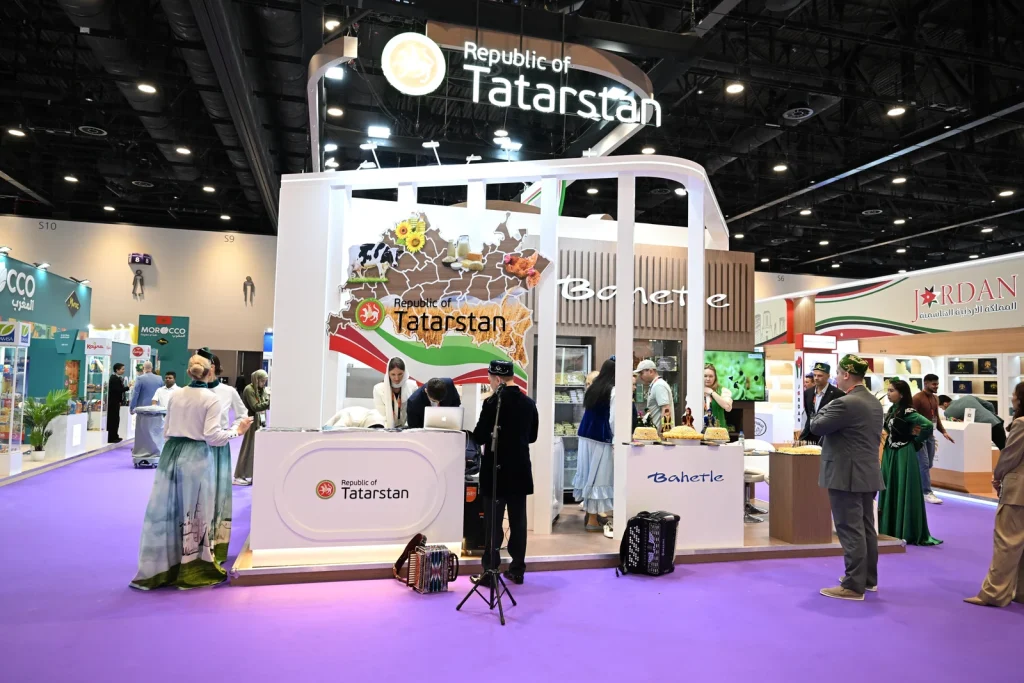
Gulfood 2026, the 31st edition of the Middle East’s flagship food trade show, closed on January 30 having done something no previous edition had attempted: it ran across two venues. Alongside the familiar halls of the Dubai World Trade Centre, exhibitors and buyers spilled into the new $2.7 billion Dubai Exhibition Centre at Expo City — a physical expression of how far the show has outgrown its old footprint.
The numbers were commensurately large. More than 8,500 exhibitors presented upwards of 1.5 million products to around 300,000 attendees from over 195 countries. The show’s Big Deal Hub — a structured matchmaking format — reportedly channeled AED 168 billion in deals through more than 3,500 meetings involving over 1,000 buyers.
India takes center stage
India was the edition’s official country partner, and it showed. More than 600 Indian exhibitors took part, including household names such as Amul, Everest, MDH, Mother Dairy and Rasna. The pavilion’s scale reflected a broader push by Indian food exporters to convert the country’s agricultural output into branded, export-ready product lines aimed squarely at Gulf buyers.
A show that keeps scaling
The two-venue format was the headline, but the underlying story is demand. The Gulf remains one of the world’s most active food-import regions, and Gulfood’s continued expansion — new halls, new matchmaking formats, record attendance — mirrors the import appetite of its host market. For a show in its fourth decade, the growth curve shows little sign of flattening.
The matchmaking machine
The Big Deal Hub deserves a closer look. Structured matchmaking — pre-scheduled meetings between vetted buyers and sellers — has become the show’s engine for converting foot traffic into contracts. More than 3,500 meetings across the edition suggests the format is working: buyers arrive with procurement lists, exhibitors arrive with samples and price sheets, and the hub compresses weeks of outreach into a few days. For first-time exhibitors, booking into the hub may matter as much as the booth itself.
The takeaway
For exporters, the split-venue Gulfood is now a logistical fact to plan around: booth strategy, buyer meetings and even hotel bookings span two sites. But the deeper message is the one the attendance figures carry — the buyers who flew in for 3,500 structured meetings came with budgets, not brochures. If the Middle East is on your 2026 roadmap, Gulfood is where the year’s conversations begin — and where the serious ones increasingly happen across two postcodes instead of one.