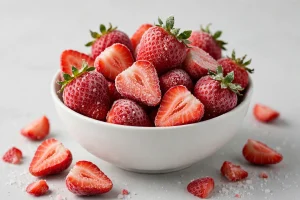
Frozen strawberries topped Egypt’s food export rankings in the first half of 2025, with shipments surging 75% year on year to $442 million, according to the Food Export Council. The milestone caps a rapid build-out of IQF capacity in the Nile Delta and confirms Egypt’s arrival as a heavyweight supplier to European and Asian frozen-fruit buyers — a remarkable climb for a category that barely registered in global trade a decade ago.
Capacity investment behind the surge
The export boom rests on processing infrastructure, not just farmland. Egyptian packers have spent recent seasons adding individual-quick-freezing lines, expanding cold storage, and tightening the harvest-to-freezer pipeline that determines berry quality. Strawberries are among the most time-sensitive fruits to freeze: hours matter between picking and the IQF tunnel. The country’s ability to move ever-larger volumes while holding grade is what converted European trial orders into program business.
Why EU and Asian buyers keep ordering
For European manufacturers of jams, yogurts, and bakery fillings, Egypt offers a combination that is hard to match: counter-seasonal availability relative to northern hemisphere production, competitive pricing, and steadily improving quality consistency. Asian demand has added a second growth engine, with buyers in the region increasing frozen berry intake as Western-style dairy and bakery categories expand. The 75% first-half jump suggests Egypt is taking share rather than merely riding a rising market.
What competitors should watch
Traditional frozen strawberry origins now face a supplier that competes on both price and scale, with a harvest calendar that fills gaps in their own seasons. The strategic question for established exporters is no longer whether Egypt is a temporary phenomenon — the capacity on the ground says otherwise — but how to differentiate as Egyptian volumes keep climbing. Quality segmentation, varietal selection, and value-added formats are the likely battlegrounds.
What “number one” means for the trade
Topping a national food export ranking is about more than bragging rights. It means frozen strawberries now anchor Egypt’s food-export economy — drawing investment into packhouses, cold-chain logistics, and agricultural extension services that benefit the wider produce sector. Export success at this scale also disciplines quality: when a single category represents hundreds of millions of dollars, both government and industry have strong incentives to protect its reputation through phytosanitary compliance and consistent grading. The $442 million first-half figure, up 75% year on year, suggests the flywheel is already turning — export earnings funding the capacity that wins the next round of orders.
Buyer and supplier takeaway: Egypt belongs on every frozen strawberry sourcing shortlist. Buyers gain a counter-seasonal, cost-competitive option; competing origins need a clear quality or format story to defend their shelf space.