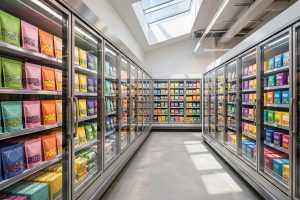
German consumers pushed frozen food consumption to a record 51.6 kilograms per person in 2025 — about 4.24 million tons nationwide — according to the Deutsches Tiefkühlinstitut, with frozen vegetables and herbs the strongest-performing category. The milestone lands alongside a global IQF vegetables market valued at $8.89 billion in 2025 and forecast to grow 5.7% annually to roughly $14.7 billion by 2034: demand and technology advancing in lockstep.
Vegetables lead the German freezer
That vegetables and herbs top the growth ranking is no accident. German shoppers have embraced frozen produce as a quality choice rather than a compromise — nutritionally close to fresh, available year-round, and waste-free in portioned formats. The 51.6 kg per-capita figure reflects deep penetration across household types, from single-person homes that value portion control to families batch-cooking weeknight meals. For exporters, Germany’s freezer aisle is the single most important demand signal in European frozen vegetables: what sells there sets specifications everywhere else.
Smarter freezing behind the growth
The equipment side of the industry is keeping pace with the demand curve. JBT has expanded its IQF portfolio with IoT sensors and AI-driven predictive maintenance, moving freezer management from reactive repairs to forecasted servicing — less unplanned downtime, more consistent product quality, lower energy use per ton frozen. As the IQF vegetables market heads toward $14.7 billion, that kind of efficiency gain matters: margins in frozen processing are thin, and the plants that win the next decade will be the ones that freeze more, waste less energy, and document every batch.
Why the IQF market keeps compounding
The IQF vegetables market’s projected climb from $8.89 billion to roughly $14.7 billion at a 5.7% annual rate rests on several reinforcing drivers. Foodservice operators prize IQF for portion control and zero waste — a kitchen can pull exactly what it needs from a frozen bag, a discipline that fresh produce cannot match. Retail private-label programs favor IQF for the same reason, building entire frozen vegetable lines around the format’s consistency. And in emerging markets, the spread of cold-chain infrastructure is unlocking frozen consumption for the first time, adding new demand on top of mature-market growth. Each driver strengthens the others, which is why the category’s growth has proven so resilient across economic cycles.
Energy efficiency as competitive edge
Freezing is energy-intensive, and energy is one of the largest cost lines in a processing plant — which makes equipment efficiency a direct margin lever. IoT sensors that monitor freezer performance in real time, paired with AI models that predict maintenance needs before breakdowns occur, attack both downtime and energy waste at once. For buyers, the relevance is indirect but real: suppliers running modern, monitored freezing lines deliver more consistent quality at more stable costs, and those advantages compound over multi-year supply agreements.
Buyer and supplier takeaway: Germany’s record consumption confirms the European frozen-vegetable cycle is still in expansion. Buyers should secure multi-season programs with specification-grade suppliers now; processors should treat freezer technology upgrades as competitive necessities, not capital luxuries.