SIAL Shanghai 2025 closed on May 21 at the Shanghai New International Expo Centre after three days that gathered more than 5,000 exhibitors from 75 countries and some 350,000 food products. Staged under the theme “Inspire Innovation, Taste the Future,” the show doubled as a snapshot of where China’s food industry — and the international suppliers courting it — believes demand is heading next. For international suppliers, the show has become the single most efficient way to read Chinese demand in person.
Innovation as the organizing principle
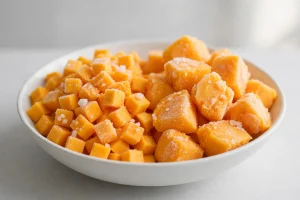
The “Taste the Future” theme placed product innovation at the center of the halls: functional ingredients, convenience formats and health-positioned products drew the strongest foot traffic. For frozen produce suppliers the message aligns with global currents — buyers are hunting for ingredients that deliver convenience and nutrition credentials together, not commodity tonnage alone. Value-added frozen lines, from ready-to-cook vegetable mixes to IQF fruits positioned for snacking and foodservice, fit the brief the theme articulated. Frozen fruit for the booming tea-and-juice chain segment was a visible sub-trend, with suppliers pitching IQF formats tailored to beverage applications. Health positioning, meanwhile, has moved beyond low-fat clichés into protein enrichment, gut-health claims and clean-label formulations — all of which pull through demand for recognizable vegetable and fruit ingredients. The 350,000-product count itself tells a story: this is no longer purely a deal-making fair but a trend observatory for the region, where ranging decisions for the next twelve months get informed.
What the scale means for exporters
Seventy-five exhibiting countries confirm SIAL Shanghai’s role as the international food industry’s main gateway to Chinese buyers — and as a meeting point for wider Asian regional trade. For exporters targeting China and neighboring markets, the message is that in-market presence still matters: tastings, relationship-building and face-to-face negotiation remain the currency of Asian food trade. Exhibitors leave with qualified pipelines; observers leave with homework. Suppliers who aligned their portfolios with the convenience-plus-nutrition brief found receptive audiences, while those still pitching purely on price found the conversation harder. The show’s international halls also serve as a neutral ground where buyers from across Asia — not only China — consolidate their supplier meetings for the year.
What it means for suppliers: With 5,000 exhibitors and 350,000 products, SIAL Shanghai 2025 cemented its status as Asia’s innovation showcase — exporters whose portfolios match the convenience-plus-nutrition brief will find the region’s buyers open for business, and the innovation signals from its halls will echo through Asian buying programs for the rest of the year.