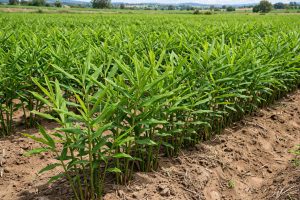
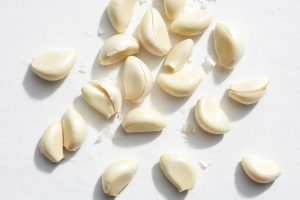
The 2025 garlic harvest in Jinxiang — China’s benchmark garlic-growing county — got underway in May, delivering better-than-expected quality despite planting delays caused by heavy October 2024 rains. Planting area reached 855,000 hectares, an 8% increase year on year. The combination of expanded acreage and solid quality is already showing in trade figures: 2025 export volumes are up 1.4% year on year, while average export prices have fallen 13.6%. Jinxiang’s figures function as the industry’s reference price for Chinese garlic, so the county’s harvest outcome reverberates through global contracts.
A rain-delayed planting that recovered
October 2024 rainfall pushed planting schedules back across the region, sparking early worries about bulb development and sizing. The crop’s recovery to better-than-expected quality speaks to garlic’s hardiness — and explains why buyers watch field conditions in Shandong as closely as price screens. For importers, the quality outcome matters more than the weather narrative: new-crop availability is confirmed, and the sizing profile supports both fresh and processing channels. Agronomists credit a mild spring for the rebound, which allowed late-planted fields to catch up on vegetative growth before bulbing.
More hectares, softer prices
An 8% expansion in planted area against export volume growth of just 1.4% describes a comfortably supplied market — and the 13.6% slide in average export prices is the arithmetic consequence. For buyers, 2025 is shaping into a favorable contracting year, with room to negotiate. For growers and packers, it is a margin squeeze that rewards operational efficiency and quality premiums over volume chasing. The spread between standard and premium grades is likely to widen as buyers get choosier. Dehydrated garlic flake and powder producers feel the price slide most directly, since bulb cost is the dominant input — expect competitive offers from Chinese dehydrators through the third quarter.
How buyers should play the window
With new-crop supply confirmed and pricing soft, the current window favors building forward coverage — especially for dehydrated garlic products, where raw-material cost dominates the finished price. But soft markets punish complacency: better-than-expected quality is not uniform quality, and specification discipline at origin — sizing, defect tolerances, microbiological standards — separates genuine bargains from cheap problems. Lock the volume, verify the grade. Storage-crop holders from the 2024 season, meanwhile, face a straightforward choice: move remaining old-crop inventory quickly or compete against cheaper new crop all summer.
Bottom line: Jinxiang’s 2025 harvest sets up the classic oversupply equation — area up 8%, prices down 13.6% — making it a buyer’s year, provided quality specifications are enforced at the source; in an oversupplied market, the disciplined buyer wins twice, on price and on grade.