By Smiler Food
Bell pepper is one of the few frozen vegetables bought as much for its colour as for its flavour: red, yellow and green pieces add instant appeal to stir-fries, pizza toppings, fajita mixes and ready meals, and hold their shape well after cooking. Because fresh peppers are seasonal and soften quickly after harvest, many buyers source them frozen instead. IQF bell pepper — individually quick frozen — keeps each strip or dice separate, so kitchens can pour out exactly the amount they need and keep the rest frozen for later use.
China is a practical origin, with processing close to the growing areas. Before placing an order, though, check the product the same way you would any frozen vegetable: strip width, colour mix and free-flow behaviour.
Strip width: match the cut to the dish
IQF bell pepper is usually offered as strips or dices. Strips suit stir-fries and fajitas, where long, visible pieces matter; dices suit pizza toppings, sauces and mixed vegetable blends, where the pepper should spread evenly.
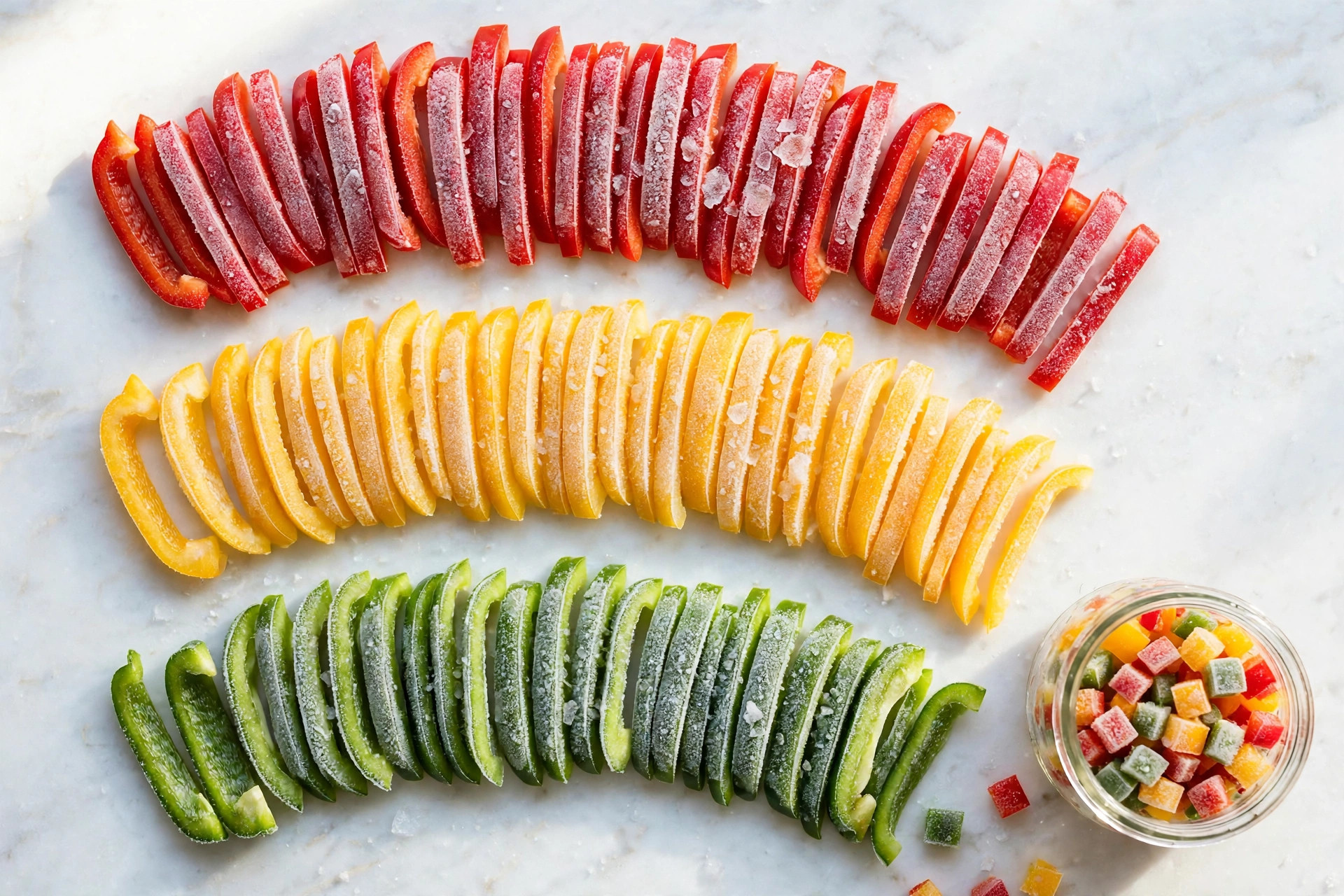
Strip widths are normally agreed in the specification — for example, widths of 6–8 mm, 7–9 mm or 8–10 mm. The width should match the application: narrow strips cook fast and fold easily into noodles and rice dishes, while wider strips stay visible and hold their bite in stir-fries. When you inspect a sample, look for strips of even width with cleanly cut edges; ragged edges or many tiny fragments suggest the peppers were cut while too soft or handled roughly before freezing.
Colour mix: bright, even and as agreed
Good IQF bell pepper is bright and glossy in colour — deep red, clear yellow and fresh green — with no dull, brownish or greyish patches. Colour selection and the proportions of each colour in a mixed-colour pack are agreed in the specification, so the blend you receive should match what was quoted rather than shifting from lot to lot.
Spread a handful of thawed strips on a white plate under daylight: each colour should be consistent from piece to piece, with no dark spots or faded, waterlogged pieces. A small share of off-colour pieces is normal in a natural product, but wide variation across the sample is worth raising with the supplier.
Free-flow: pieces that stay separate
The main advantage of IQF over block-frozen bell pepper is that the pieces stay loose. Pour a frozen sample into a bowl: the strips should tumble out separately, with only a light frost on the surface. Large clumps, a solid icy mass or heavy frost inside the bag point to thawing and refreezing along the chain — and clumped pepper is hard to portion and cooks unevenly.
The bag should be sealed flat, with no ice crystals packed around the pieces, and the product should feel loose when you squeeze it gently. If the sample arrives as one solid block, raise it with the supplier before confirming the order.
What to ask before you buy
Ask for a specification sheet and a sample from the same production lot you would be buying. It should state the colour selection and proportions, the cut dimensions and the packing format, and the sample should match it. Confirm the packaging size that fits your operation — foodservice kitchens often prefer smaller bags they can open and use in one service, while processors may take larger cartons.
Specifying a wider stir-fry or ready-meal range? Compare our IQF mixed vegetables and IQF onion alongside the bell pepper specification.
Smiler Food supplies IQF bell pepper from China in strip and diced forms, in red, yellow, green and mixed colours, packed for foodservice and processing buyers. To request a specification sheet or a sample, contact us at [email protected] or via WhatsApp at +86 155 8883 1399.