Green peas look like a simple frozen vegetable, but buyers who order them in bulk soon learn that a bag of peas can hide more variation than its colour suggests. Maturity, size, and handling all show up in the finished dish, and none of them can be corrected after freezing. For buyers sourcing IQF green peas from China, a few checks before ordering prevent most of the problems that only appear on the production line.
1. Maturity Decides Tenderness
Maturity at harvest is the single biggest factor in pea quality. Young peas are tender, sweet, and bright green, while over-mature peas turn starchy, pale, and mealy. Because maturity advances quickly in the field, and because no factory step can reverse it, the specification has to do the work.
Ask what maturity standard the offered lot was harvested against, and confirm that it is written into the specification rather than assumed. A sample that tastes mealy or starchy at the centre, even when it looks acceptable while frozen, usually points to over-mature harvest rather than to a freezing problem.
2. Size Grade Should Be Agreed, Not Assumed
Peas are sized after blanching and freezing, and size is closely linked to tenderness: smaller peas generally come from younger, more tender harvests. What matters is that both sides agree on what the quoted grade measures.
Check size consistency in the sample as well as the grade name. A batch that mixes small and large peas will cook unevenly and portion unpredictably, which is a particular problem in ready meals and foodservice, where every portion should behave the same way.
3. Colour and Skin Integrity
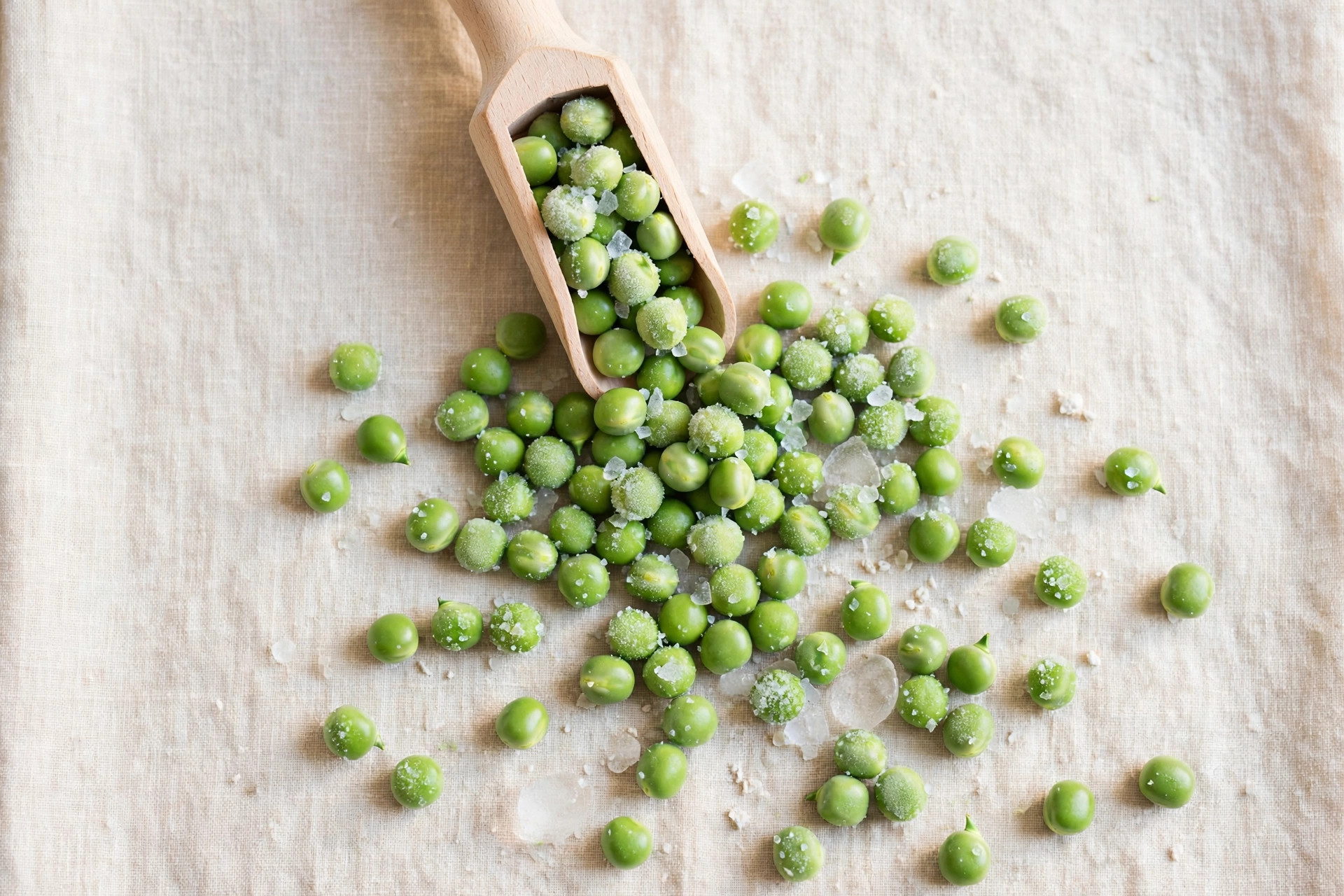
Colour is the most immediate quality signal. Bright, even green suggests careful selection and handling, while blond, pale, or discoloured peas point to maturity differences or problems upstream. Check colour across the whole sample, not just the top layer of the bag, and look for broken skins, split peas, and foreign matter at the same time.
Check skin integrity after cooking, not only on arrival: peas intact while frozen can split during the buyer’s own cooking step.
4. Blanching and Free-Flow Behaviour
Peas are blanched before freezing to stabilise colour and texture. Under-blanching can show up as dull colour and off-flavours in storage, while over-blanching leaves a mushy texture. Ask for the blanching step to be stated on the specification sheet.
Free-flow behaviour is the other check that belongs in every sample trial. Individually quick frozen peas should pour freely from the bag. Clumping usually signals excess surface moisture before freezing or temperature abuse somewhere in the chain, and clumped product is harder to portion, slower to use, and more likely to cook unevenly.
5. What to Put in the Enquiry
A short enquiry, answered against the supplier’s own specification sheet, prevents most misunderstandings. State the product and freezing method, the maturity standard and size grade you are targeting, and your tolerances for colour and defects, expressed as numbers or grades where your business already uses them. Add the packing you need, the quantity and destination market, and whether you want a pre-shipment sample from the offered lot.
Finally, judge the sample on your own line, not against a photograph. Thaw a portion, check tenderness, colour, skin integrity, size consistency, and free-flow behaviour together, and ask for a sample from the same production standard as the order. Peas reward buyers who specify maturity and grade before the season, and who check the details before they commit.
To discuss IQF green peas, contact Smiler Food at [email protected] or via WhatsApp at +86 155 8883 1399.