Edamame looks like a straightforward frozen vegetable, but buyers who order it in bulk soon learn that the form matters as much as the vegetable itself. Pods and shelled beans serve different menus, portion differently, and show quality problems in different ways. For buyers sourcing IQF edamame from China, deciding on the form first makes every later check easier.
1. Choose the Form Before You Compare Prices
Edamame in pods is typically served as a snack or starter, where the pod itself is part of the experience. Shelled edamame, by contrast, is an ingredient: it goes into salads, rice bowls, stir-fries, and ready meals, where a clean, ready-to-use bean saves preparation time. Comparing a pod price with a shelled price therefore tells a buyer very little, because the yield, the preparation, and the end use are all different.
Ask the supplier to confirm which form each quotation covers: IQF shelled edamame or in pods.
2. Pod Fill and Bean Size
For edamame in pods, pod fill is the first thing to check in a sample. Well-filled pods feel plump along their length, with beans that are easy to see and feel through the pod wall. Thin, flat, or largely empty pods suggest immature beans or inconsistent selection, and they disappoint customers who buy the product for its eating quality.
Look at bean size as well. Beans within one batch should look broadly similar, so that they cook evenly and portion predictably; a wide mix of small and large beans will cook unevenly.
3. Colour and Appearance
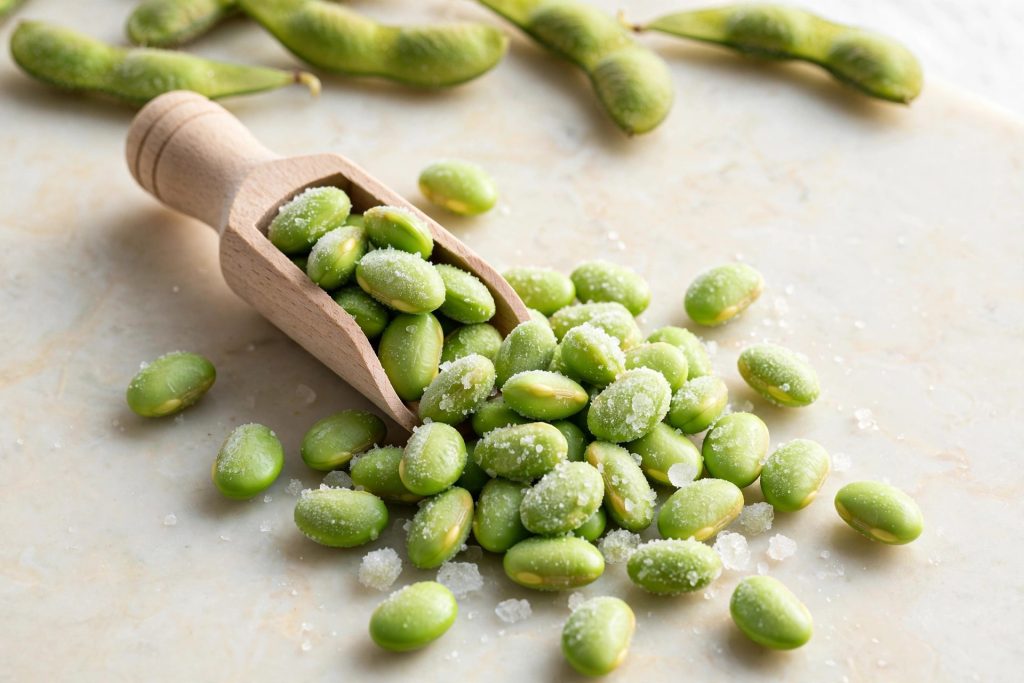
Colour is the most immediate quality signal for both forms. Fresh, bright green beans suggest careful selection and handling; dull, yellowed, or blotchy beans point to maturity differences or problems upstream. For pods, check the pod colour too; pods should look fresh and green, not dried out or discoloured at the ends.
Check colour across the whole sample, not just the top layer, and look for broken pods, split beans, and foreign matter at the same time.
4. Free-Flow Behaviour After Freezing
Individually quick frozen edamame should pour freely from the bag, whether it is in pods or shelled. Clumping usually signals temperature abuse somewhere in the chain, or excess surface moisture before freezing. Clumped product is harder to portion, slower to use in a kitchen, and more likely to cook unevenly.
Test this in the sample: pour the beans from the bag and see whether they separate easily. If the product arrives as a solid block, raise it with the supplier before ordering.
5. Questions to Ask Before You Order
A short list of questions, answered against the supplier’s own specification sheet, prevents most misunderstandings. Ask which form is quoted, how pod fill and bean size are graded, what the product looks like after thawing as well as while frozen, and what packaging options are available for your channel. For shelled edamame, also ask about the share of broken or split beans the supplier accepts in a batch.
Finally, ask for a sample from the same production standard as the order, not a hand-picked showcase sample. Judge it on pod fill, colour, size consistency, and free-flow behaviour together, because a product that passes one check but fails another will still cause problems in service. Edamame rewards buyers who check the form first and the details second.
To discuss IQF edamame in pods or shelled, contact Smiler Food at [email protected] or via WhatsApp at +86 155 8883 1399.