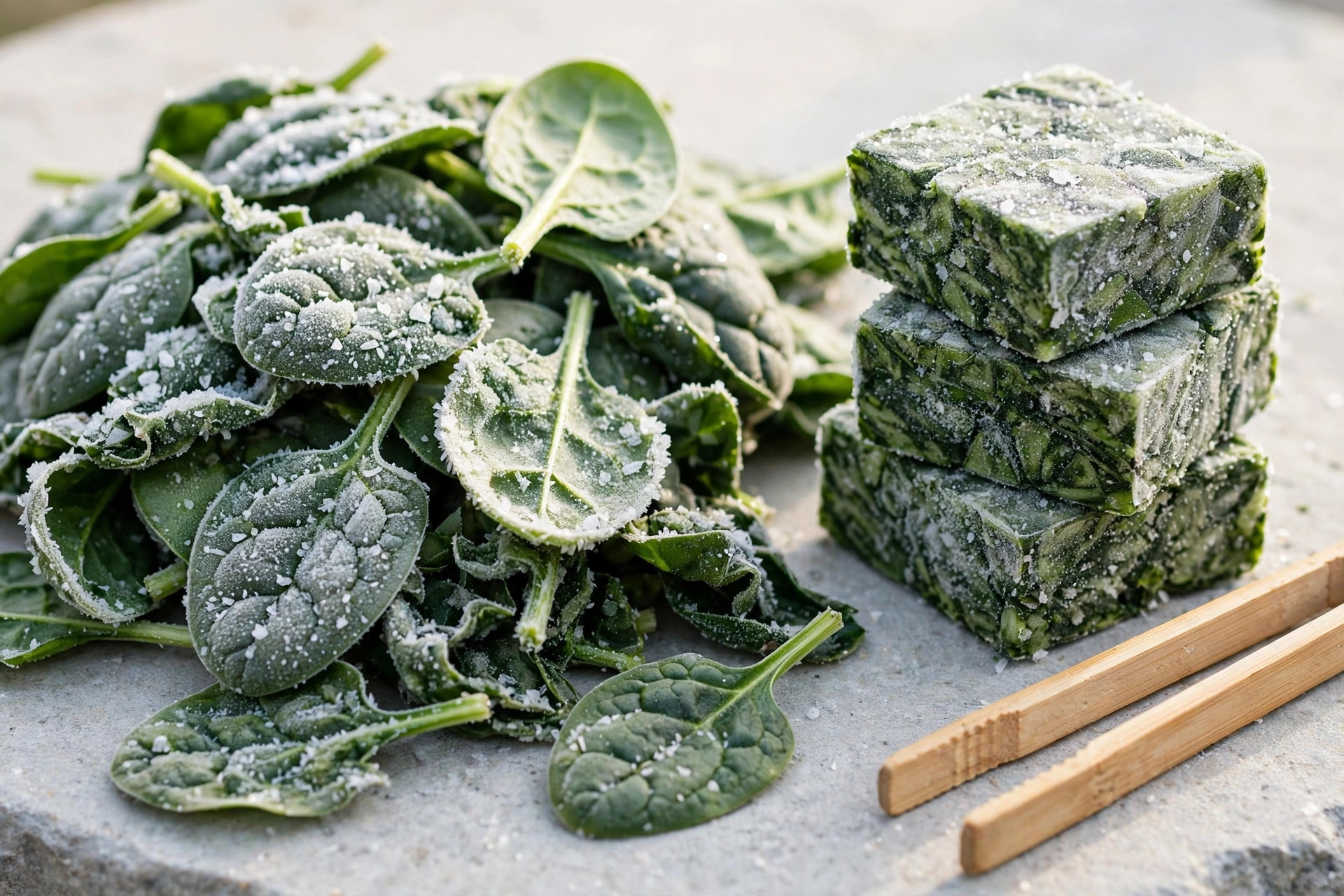
IQF spinach gives food manufacturers and distributors a practical way to keep a leafy green on the menu all year round, without depending on a short fresh season. Because each leaf or piece is frozen individually, buyers can pour out only what a batch needs and return the rest to cold storage. That flexibility suits soups, sauces, pasta fillings and ready meals, where consistent colour and texture matter more than a perfect fresh leaf.
For buyers sourcing from China, the checks that matter most are everyday quality points that decide whether a delivery runs smoothly through production or causes sorting and waste at the line. This guide sets out what to look for in IQF spinach, so a sample can be judged on the same points as a full order.
Leaf, chopped or balled: choose the form first
IQF spinach is commonly supplied as whole leaf, chopped leaf, or balled portions. Whole leaf suits dishes where the leaf should stay visible. Chopped spinach blends evenly into fillings and sauces and is easier to dose by weight. Balled portions suit kitchens and smaller runs where a fixed portion per batch speeds up preparation. Agree the form before anything else, and name one form per line on the purchase order.
Colour and leaf condition
Good IQF spinach should look like spinach: a deep, even green, with leaves that still read as leaves rather than a dark, pulpy mass. Some variation between leaves is normal in a natural product, but large patches of yellowing or browning, or a dull grey-green cast across the lot, are worth raising with the supplier before accepting the shipment. The fairest test is a sample cooked in its actual application, not one judged only while frozen.
Free-flow and clumping
The point of IQF is individual pieces, so free-flow is a central check. A bag of IQF spinach should pour as separate leaves or pieces, not as one solid frozen block. Light clumping can happen in handling, and gentle pressure should break it apart. Hard, fused lumps that survive handling suggest the product warmed and refroze somewhere along the chain, and that is a cold-chain question, not just a cosmetic one.
Stems, foreign matter and consistency
A small amount of fine stem is part of a leafy crop, but long, woody stems change the eating quality and slow down preparation. Agree in advance what stem level is acceptable for your application, and judge samples against that agreed point rather than an ideal that was never discussed. Leaves should also be clean and free from soil, grit and unrelated plant material as far as normal washing and sorting allow.
Cold chain and packing for bulk orders
IQF spinach is only as good as its cold chain. From the factory freezer to the container and on to the buyer’s cold store, the product should stay frozen throughout, with no extended time at ambient temperature during loading or transfer. Before ordering in bulk, confirm the packing format, carton size and pallet arrangement, so the delivery fits your storage and handling routines without repacking on arrival.
What to ask before ordering
A short checklist keeps the conversation focused: which form is being supplied, what colour and stem standard the lot will be judged against, how free-flow is protected through packing and transport, and how the cold chain is maintained to the port of loading.
Smiler Food supplies IQF spinach alongside a wider range of IQF frozen vegetables for food manufacturers and distributors worldwide. Contact us at [email protected] or via WhatsApp at +86 155 8883 1399 to discuss your requirements and request a sample.