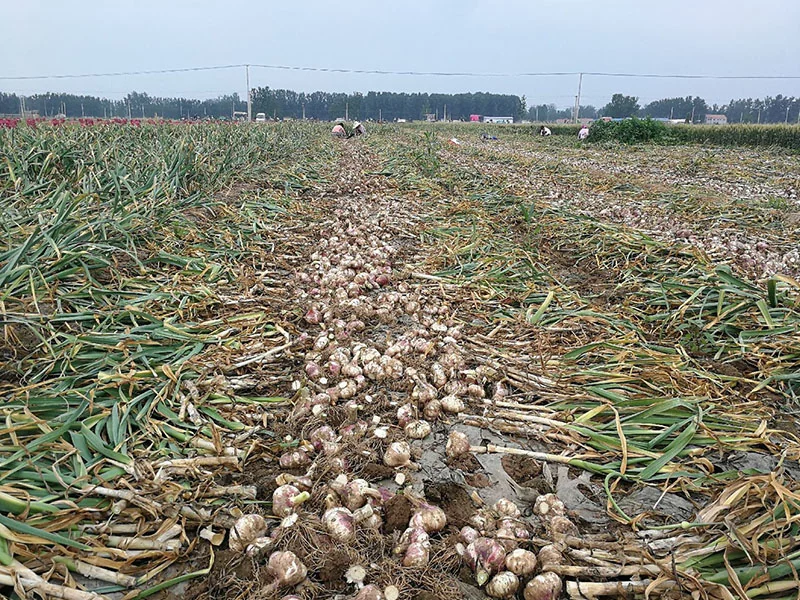
China’s 2026 garlic crop is a tale of two qualities. Planted area rose 18% year on year and the harvest was expected to run 15–20% larger — the kind of supply picture that normally points to a buyer’s market. Then the rain came. Post-harvest downpours caused mold and quality deterioration across curing stocks, leaving high-quality garlic unexpectedly tight even as headline volumes grew, freshplaza reported in mid-August.
The season started late and stayed behind. First export shipments went out in early June, more than a week behind schedule, and volumes ran below last year’s pace. For the origin that sets the global garlic price, a slow start compresses the entire marketing calendar: contracts written against normal timing have had to stretch, and early-season premiums reflected scarcity rather than abundance.
The delay has had knock-on effects through the supply chain. Packing schedules compressed, container bookings bunched into a shorter window, and importers who normally build early-season inventory found themselves competing for limited early lots. In a normal year, China’s new-crop garlic flows steadily from June; this year the flow has been lumpy, with availability improving only as more curing sheds finished drying rain-delayed stocks.
The old crop bridges, then thins
Carryover stocks provided the bridge. Old-crop inventories stood near 1 million tons in early May but had been drawn down to roughly 600,000 tons, as exporters leaned on stored garlic while the new crop cured and dried. That drawdown of about 40% in three months shows how heavily the market relied on the old crop — and how thin the cushion has become heading into the main new-crop shipping season. With less buffer in store, any further quality fallout in the new crop would feed straight into prices.
A two-tier market takes shape
The practical result is segmentation. Sound, well-cured garlic commands firm pricing and moves quickly; rain-affected lots trade at discounts to buyers willing to take quality risk. Origin reputation is no longer enough this season — lot-level inspection, mold testing and clear quality specifications matter more than in a normal year. Suppliers with covered curing and proper drying infrastructure are earning a visible premium over those caught by the weather.
The buyer takeaway: do not read the acreage number as a price forecast. China’s 2026 garlic market will be decided by quality sorting, not tonnage. Secure high-grade supply early, specify tolerances tightly, and treat discounted rain-affected offers with appropriate caution — the spread between the two tiers is this season’s real price signal.