Vietnam’s produce trade has crossed a line it never had before. Preliminary figures from the Vietnam Fruit and Vegetable Association (VINAFRUIT), reported by vietstock, put July 2026 fruit and vegetable exports above $1 billion — the first billion-dollar month in the sector’s history. The month was up 13% on June and 38% on July last year, capping a run that has made horticulture one of Vietnam’s standout export stories.
The seven-month tally is equally striking: exports topped $4.7 billion from January to July, up 23% year on year, with a trade surplus of roughly $3 billion. Few agricultural sectors anywhere are growing that fast off that base, and the pace shows no sign of fading as the second half — traditionally the stronger export window — gets underway.
The milestone also reflects years of groundwork: expanded cold-chain logistics, improved post-harvest handling, and phytosanitary agreements that opened new markets. Vietnamese growers have steadily moved up the value chain from raw bulk shipments to graded, packed fruit meeting the specifications of demanding retail buyers — a shift that supports both the volume growth and the unit values behind the $1 billion month.
Durian does the heavy lifting
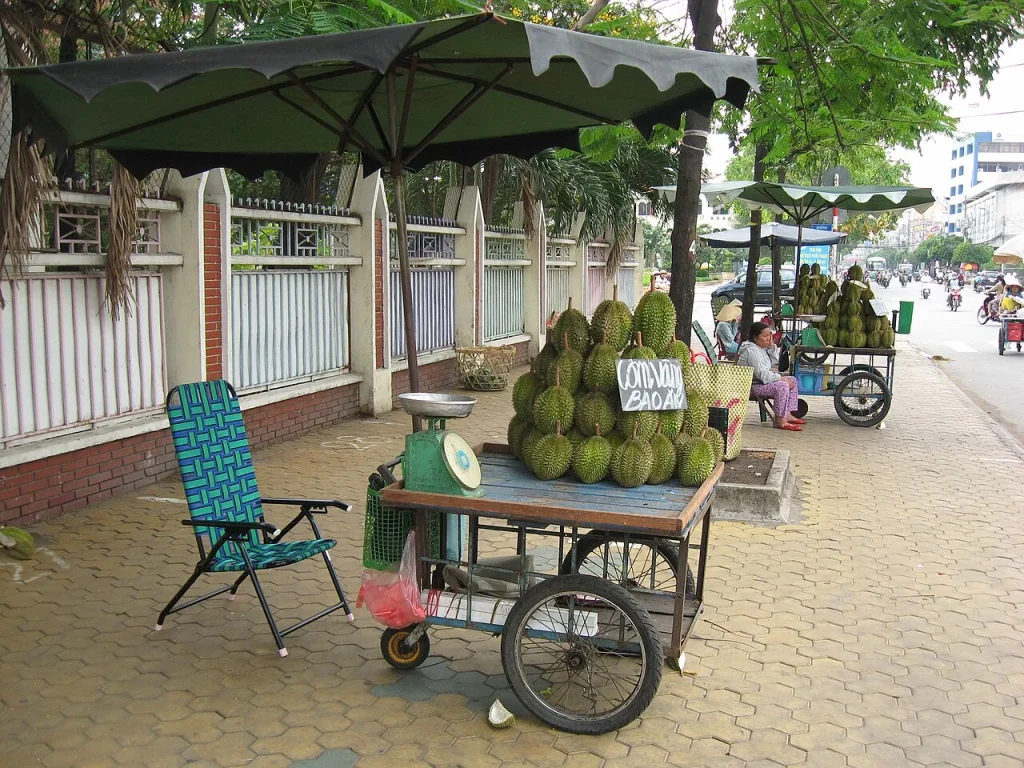
One crop explains most of it. Durian now accounts for more than half of Vietnam’s fruit and vegetable export revenue — an extraordinary concentration that reflects Chinese appetite and Vietnam’s expanding planted area coming into bearing. When a single fruit carries the majority of a multi-billion-dollar trade, the sector’s fortunes are effectively the durian market’s fortunes, for better and worse. Price swings in that one category now move the national export statistics.
China first, America rising
China remains the dominant buyer by a wide margin. June shipments to China exceeded $621 million, and first-half exports reached roughly $2 billion, up 25% and representing about 55% of the total. The United States is a distant but fast-growing second: June sales of $59.4 million were up 10%, and first-half exports topped $292 million, up 12%, for an 8% share. The American trajectory matters beyond the numbers — it diversifies a trade heavily exposed to a single market and a single fruit, and US phytosanitary protocols, once cleared, tend to open doors elsewhere.
The concentration question
For buyers, Vietnam’s scale now makes it a structural origin rather than an opportunistic one, particularly for tropical fruit. For competitors, the $1 billion month resets expectations of what Vietnamese supply can do in peak season. And for everyone in the chain, the subplot is concentration risk: durian dependence plus China dependence means any disruption — weather, phytosanitary action, or a demand wobble — would land hard. Diversification, on both the product and market side, is the industry’s homework while the boom lasts.