By Smiler Food
Zucchini is one of the most forgiving vegetables in a frozen blend: mild in flavour, quick to cook and easy to cut into neat slices or dices that sit well in gratins, ready meals and mixed vegetables. That mildness is also what makes it easy to get wrong. A slice that is too thin turns soft and watery in the pan, while one that is too thick stays firm in the middle and throws off the cooking time of the whole dish. For buyers sourcing IQF zucchini from China, the checks that matter most are slice thickness, skin and free-flow behaviour.
Slice thickness: match the cut to the cooking time
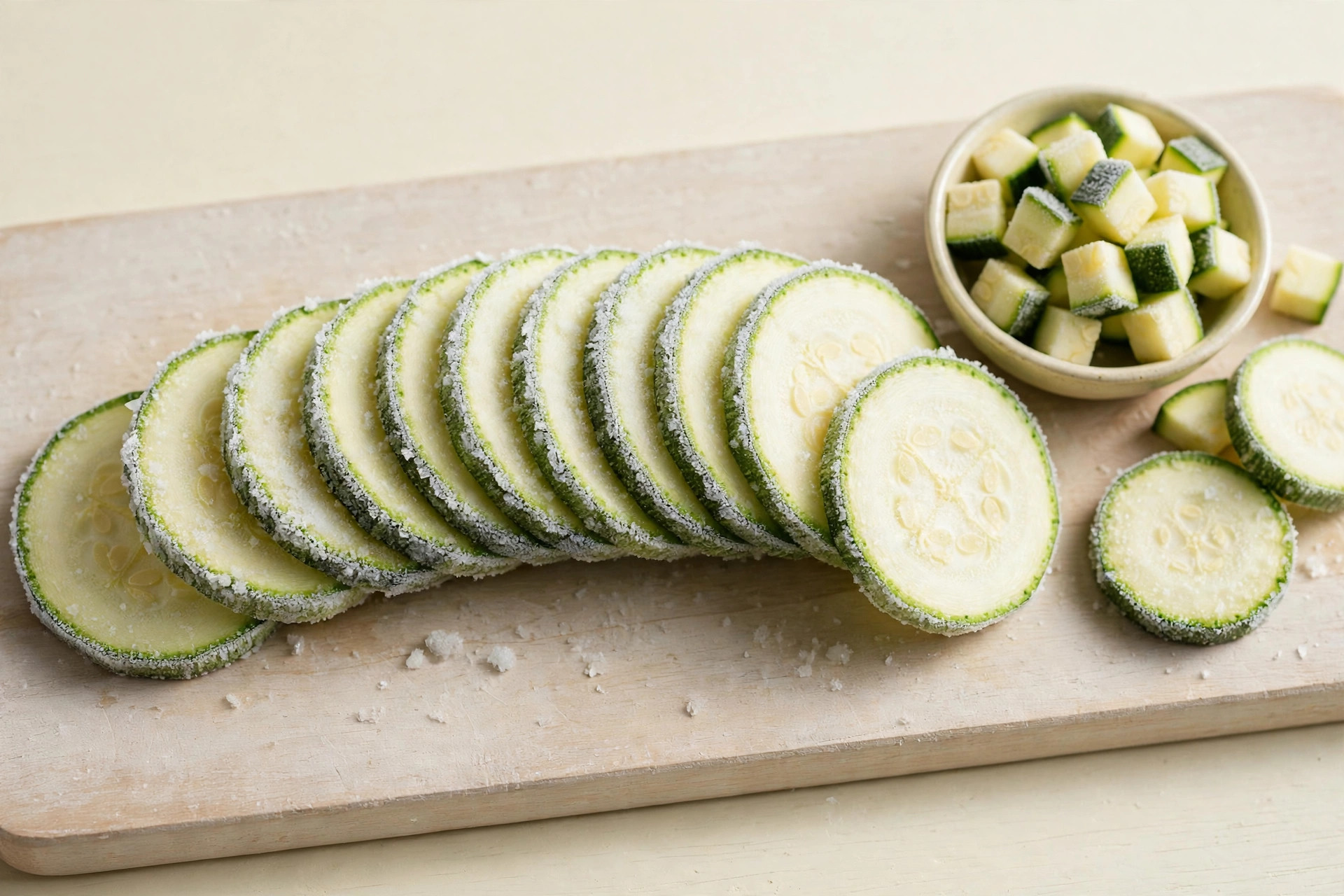
Zucchini for gratins and baked dishes is usually cut into round slices. As a reference, the slices on Smiler Food’s IQF zucchini page are listed at 30–55 mm in diameter and 8–10 mm thick — a size that holds its shape through baking without staying raw in the middle. Dices suit sauces, soups and mixed vegetable blends, where the pieces should spread evenly and cook at the same pace as the other vegetables in the mix.
Thickness is the dimension to watch. Slices cut too thin collapse during cooking and release their water into the sauce; slices cut too thick cook unevenly and can feel underdone next to thinner pieces. When you inspect a sample, check that the slices are even in thickness, with clean cut edges and a consistent diameter across the bag.
Skin: colour, condition and what is agreed
Zucchini skin is part of the product’s look: a fresh, even green edge around a pale centre signals a young vegetable picked at the right stage. Dull, yellowed or brownish skin points to over-mature fruit or long storage before processing, and it usually cooks to a softer texture.
Whether the skin stays on, and how much skin fragment is acceptable, should be agreed in the specification. Spread a handful of thawed slices on a light plate under daylight and look for a consistent green rim on each piece, with no dark spots or soft, waterlogged patches.
Free-flow: pieces that stay separate
The main advantage of IQF — individually quick frozen — over block-frozen zucchini is that the pieces stay loose. Pour a frozen sample into a bowl: the slices should tumble out separately, with only a light frost on the surface. Large clumps, a solid icy mass or heavy frost inside the bag point to thawing and refreezing along the chain — and clumped zucchini is hard to portion and cooks unevenly.
Zucchini holds a lot of water, so also check how it behaves after cooking. Water release should be assessed under the intended cooking conditions, especially where a recipe needs a controlled sauce consistency or filling moisture.
What to ask before you buy
Ask for a specification sheet and a sample from the same production lot you would be buying. It should state the cut and dimensions, the skin and preparation status, and the packing format, and the sample should match it. Confirm whether the zucchini is blanched or pre-cooked: frozen does not automatically mean ready to eat. Packing is listed at 10 kg net per carton, with the final quantity and delivery schedule confirmed in the quotation.
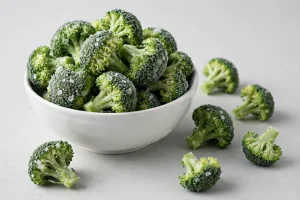
Planning gratins or blends around zucchini? Compare our IQF mixed vegetables and IQF broccoli alongside the zucchini specification.
Smiler Food supplies IQF zucchini from China in slice and diced forms for gratins, cooked meals and vegetable blends. To request a specification sheet or a sample, contact us at [email protected] or via WhatsApp at +86 155 8883 1399.