By Smiler Food
Raspberries are one of the most delicate fruits to freeze individually. A berry that looks perfect in the carton can still disappoint once it is thawed, mixed, or heated — which is why buyers who source IQF raspberries from China check the fruit against their finished product, not against a photograph.
Whole, broken, or crumble: agree the mix first
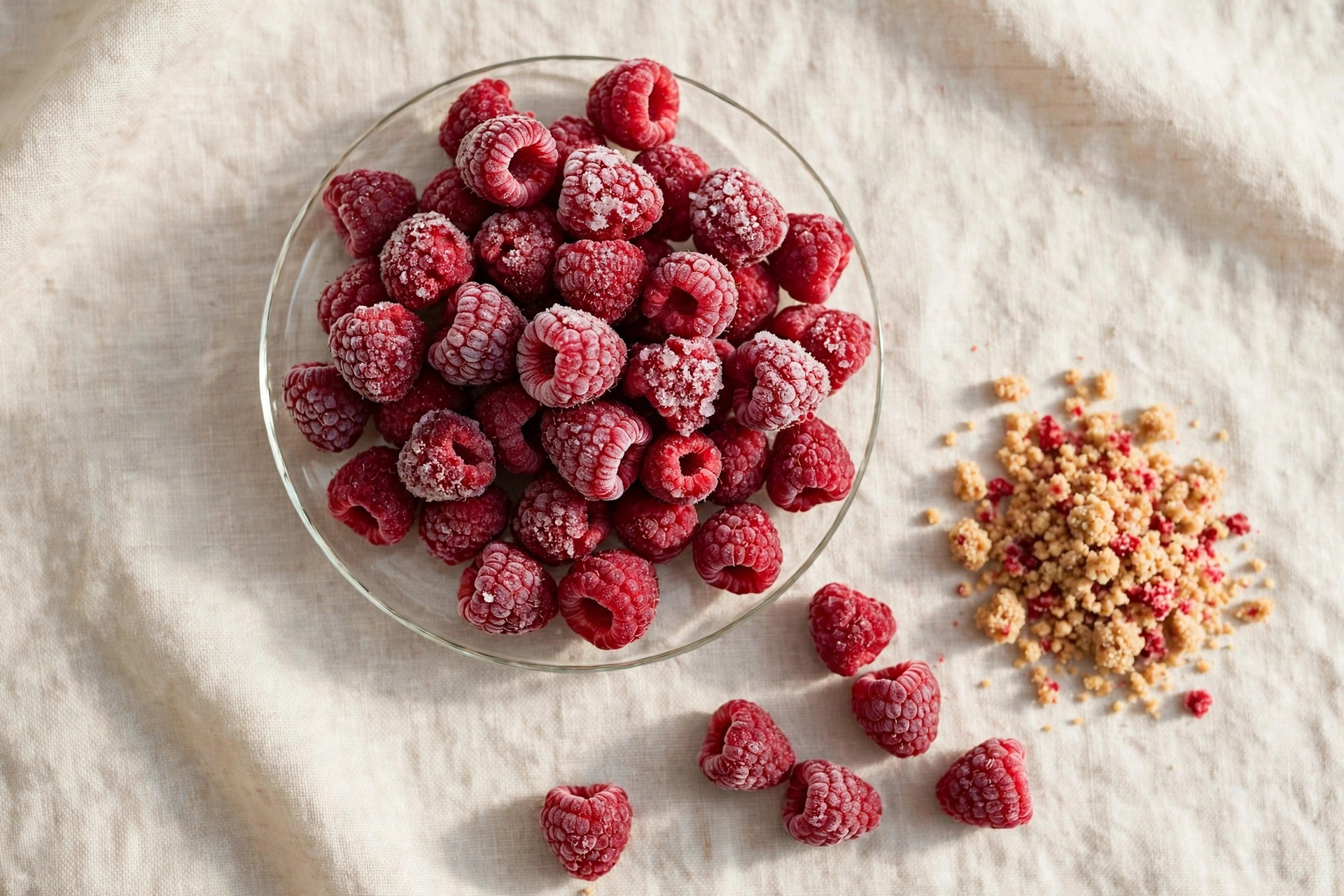
IQF raspberries are supplied as whole berries and as crumble, and the two formats serve different recipes. Whole berries suit dessert toppings, where a recognizable berry is part of the product’s appearance. Crumble suits fruit preparations for yogurt, dairy desserts, and ice cream, where the fruit is folded in and piece integrity matters far less.
Before asking for a price, agree the tolerated share of whole, broken, and crumble pieces in writing, confirmed against the approved sample. A lot that is mostly whole berries and a lot that is mostly broken pieces can both be good raspberries — they simply belong in different applications.
Colour and flavour in the finished recipe
Colour is the first quality signal a buyer sees, and it should be checked in the finished recipe rather than in the frozen carton alone. Compare colour after thawing and after the mixing or heating step your line uses, because colour can migrate into yogurt, cream, or batter during processing.
Ask for berries of even, deep colour with no pale or bleached patches, and check that the flavour is clean and characteristic of raspberry, without off-notes from storage. Request a sample with your end use and target specification attached, and evaluate it in your own process.
Size, drained weight, and thawing loss
Berry diameter and the acceptable share of undersized fruit should be agreed before ordering, especially for topping use, where small or uneven berries are visible. Count and weigh a thawed sample: drained weight and thawing loss tell you how much fruit actually reaches the finished product, so test with the method from your own production line. Texture after thawing matters too — berries that hold their shape behave differently from berries that soften quickly.
Free-flow, packing, and cold chain
Well-frozen IQF raspberries should pour freely from the carton without large frozen clumps. Clumping can point to temperature abuse during storage or transport, so check that the cartons arrive solidly frozen and that the cold chain has been kept unbroken from the factory to your warehouse. Keep the product frozen through storage and transport, and follow the temperature and shelf-life instructions on the agreed specification.
Our IQF raspberries are packed in 10 kg cartons, with an indicative minimum order of 10 tonnes and indicative preparation of 10–15 days for orders of 10–20 tonnes; larger volumes are quoted individually. Include your quantity, destination country or port, and delivery window when you enquire, so packing availability, lead time, and trade terms can be confirmed in the quotation.
What to ask for before you order
Share your end use, the whole-to-crumble mix your recipe requires, the berry size you accept, and the documents your market needs — the specification sheet, relevant site certificates, and available lot documentation. Where certification is required, confirm the issuing body, validity, and scope for the supplying facility and product. Agree the acceptance criteria before placing the order, and compare every delivery against the approved sample.
Sourcing other berries for the same programme? Compare our IQF strawberries, IQF blueberries and IQF mixed berries alongside the raspberry specification.
Smiler Food supplies IQF raspberries from China to food manufacturers and distributors worldwide. To request a sample or a quotation, contact us at [email protected] or via WhatsApp at +86 155 8883 1399.